Home » Salesians » General Council » Brazil – Salesian bishop ventures deep into the Amazon to rekindle mission work in Oiapoque
Brazil – Salesian bishop ventures deep into the Amazon to rekindle mission work in Oiapoque
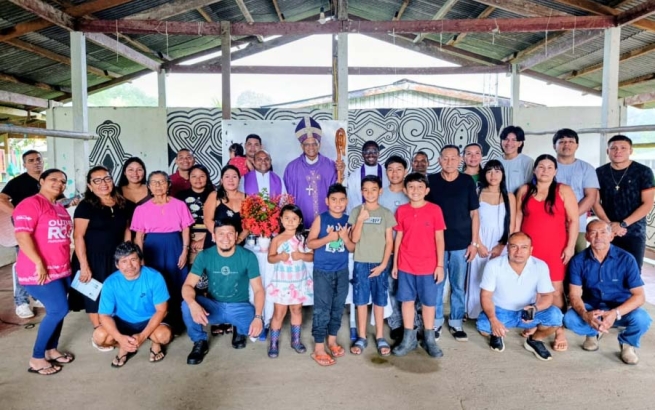
(ANS – Oiapoque) – Faith often demands more than devotion; it demands resilience. This was the hallmark of the recent pastoral visit by Salesian Bishop Antônio de Assis Ribeiro, Bishop of the Diocese of Macapá, who devoted three intense days to the Parish of Our Lady of Grace, in the municipality of Oiapoque, the gateway to Amapá on the border with French Guiana.
The first and most tangible challenge of the mission is the geography itself: a journey from Macapá to Oiapoque which, due to the approximately 130 km of unpaved road, takes a long 10 to 11 hours during the Amazonian winter, when rain is the norm. This arduous journey is the first testament to the resilience required to maintain the Church’s presence in the far north of the country.
The Diocese of Macapá in itself represents a monumental logistical challenge, as it encompasses the entire vast territory of the State of Amapá. Against this backdrop of vastness, the work of the Catholic Church extends across dozens of municipalities, reaching isolated communities, indigenous villages, quilombos and hundreds of riverside families. The intensity of the work is measured not only in kilometres, but in the diversity of peoples who need to be reached by the message of the Gospel.
Bishop Antônio’s schedule in Oiapoque was a true reflection of the pastoral needs. He not only visited urban communities but ventured into the outskirts, observing at close quarters the housing crises caused by migration, with many drawn by the illusion of development, such as the promise of oil.
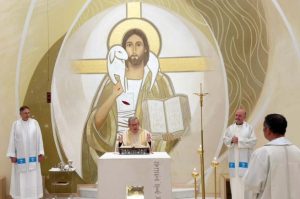
The bishop devoted time to coordinating the Parish Pastoral Council (PPC), celebrated the Eucharist and administered confirmations, but his focus was on the vision for the future: the coordination required to establish a new Missionary Area.
“This movement towards pastoral reorganisation is urgent. In just two years, Oiapoque has seen the emergence of seven new neighbourhoods (squatter settlements), a rapid population growth that demands the Church reorganise itself in every respect. The creation of Missionary Areas, such as the one planned to be entrusted to the Missionaries of the Work of Mary, is a vital theological and pastoral response. It reflects the ecclesiology of the ‘Church Going Forth’, a call for the ecclesial structure to reach out to the new urban ‘deserts’, ensuring that investment in leadership training and land acquisition leaves no one behind,” explained Bishop Antônio.
Welcoming migrants
In his sermons and meetings, Bishop Antônio encouraged leaders to develop a new sensitivity and dynamism, emphasising the need to welcome migrants and invest in the formation of new local leaders. This is the path to the sustainability of the mission, a crucial point, especially in the most remote areas, such as indigenous villages and quilombola communities.
Regarding the large migratory movement to Oiapoque, driven by hopes of many new job opportunities arising from oil royalties, the Bishop of Macapá offers a critical perspective on the growth of these opportunities:
“Yes, I believe there will be a great opportunity for investment and development for the municipality and the state. However, human development depends on the quality of resource management by the municipal and state authorities. For this reason, a preventive plan against corruption is necessary. Generally speaking, where large amounts of money flow in unchecked, there is also rampant corruption and an increase in poverty. It is therefore urgent to invest in the training of public managers with an ethical mindset and in socially responsible companies”.
Accompaniment in the villages and the seed of vocation
The evangelisation and catechesis of indigenous peoples constitute a central and delicate pillar of the Church’s work in Amapá. In the Diocese of Macapá, the mission extends to notable groups such as the Waiãpi, Palikus, Tiriyó, Galibi Marworno and Karipuna, amongst others.
The Church’s work there goes beyond the mere transmission of doctrine; it is an act of human and cultural accompaniment. Against a backdrop of economic crisis, such as the pestilence affecting cassava production and creating dependence on government support, the Catholic presence offers a spiritual point of reference and a means of promoting dignity, helping to restore the sense of community belonging that is lost through external dependence. More than that, the Church works with the hope of sowing seeds, discovering and nurturing new vocations from the land. Training indigenous leaders and catechists ensures that the message of the Gospel is spoken and lived out by voices that carry the wisdom and identity of their own ethnic groups.
With regard to evangelisation, Bishop Antônio de Assis further emphasised: “The work of evangelisation in all human contexts must always be multidimensional. Here in Oiapoque, amongst the indigenous peoples, we certainly need to further encourage the development of Catholic leadership; we must invest in the ministry of the laity, whilst also focusing on the possibility of ordaining indigenous deacons; finally, we must reflect with young people on the importance of vocational discernment, presenting to them the vocation to the consecrated, religious and priestly life.”
Faced with the vastness of his mission, Bishop Antônio de Assis Ribeiro relies on the solidarity of the wider Church. The arrival of priests from other dioceses is a gesture of fraternal communion that lightens the burden on the bishop and his teams. These temporary missionaries are essential for reaching the most remote areas, helping the local Church to map out new neighbourhoods and, more importantly, to discover and nurture the new vocations that spring from the very soil of Amapá, ensuring that the mission is always led by those who have a deep understanding of the reality of the Amazon.
Vívian Marler
Source: CNBB